Why AI Automation Agency Cold Outreach Fails in 2026, and What Works Instead
AI automation agency cold outreach is unsolicited, automated email from agencies selling AI services, and it fails when generic, high-volume sends meet buyers who have stopped responding and filters that punish complaints.
Here is the awkward part. 68% of B2B buyers report responding less to vendor outreach (Slate CX, 2026), yet agencies that sell automation keep automating the same templated sequences. If you are asking why AI automation agency cold outreach fails after another silent month, this guide gives you benchmarks, deliverability limits, AI SDR results and a six-step workflow. For a related first-touch tactic, see our guide on video outreach in cold email.
Key Takeaways
AI automation agency cold outreach fails mainly because buyers have tuned out generic pitches: 68% report responding less to vendor outreach (Slate CX, 2026).
Average cold email reply rates sit between 3.43% (Instantly, 2026) and 4.5% (Saleshandy, 2026), and the definition of a "reply" differs by vendor.
Deliverability problems such as spam complaints and open tracking quietly suppress replies before anyone reads the pitch.
Only 5% of marketers rate their AI SDRs highly effective, even though 79% of B2B organizations use or plan to use them (Slate CX, 2026).
Fewer, sharper sends to a narrow Ideal Customer Profile beat volume, because step one of a sequence produces 58% of replies (Instantly, 2026).
By Carlos Agüero, who builds multi-channel outreach, inbox deliverability and AI video tools for B2B sales teams at TargetGrid.ai, Skale.email and Potion.
Why does AI automation agency cold outreach fail?
AI automation agency cold outreach fails because buyers have learned to ignore generic automated pitches, and agencies selling automation often send the same templated messages buyers distrust. Slate CX's 2026 survey found that 68% of B2B buyers report responding less to vendor outreach (Slate CX, 2026), so sending more volume now buys less attention than it did.
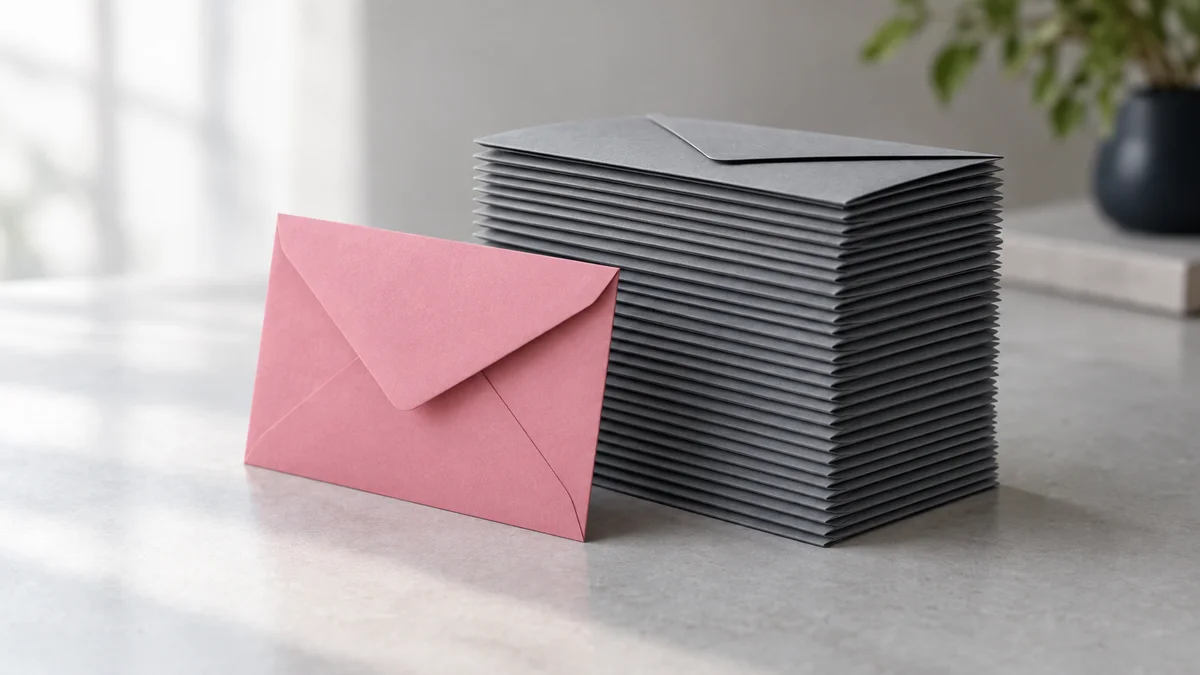
A crowded stack of identical grey envelopes with one pink envelope set apart
Buyers have tuned out automated pitches
The Slate CX report authors put the problem bluntly: "as companies automate more of the sales process, they are inadvertently pushing buyers away" (Slate CX, 2026). The survey covered more than 200 B2B leaders, so treat it as directional.
Gartner's March 2026 survey adds a second signal. It found 67% of B2B buyers prefer a rep-free experience (Gartner, 2026). Unsolicited pitches compete with buyers who would rather research alone.
The agency irony
Agencies that sell AI automation are often the heaviest users of AI-written outreach. Belkins' research team says "Generic outreach is losing ground whether a person or an AI writes it" (Belkins, 2026). The tool is rarely the problem. The sameness is.
Five failure patterns show up again and again:
Broad lists with no niche or trigger.
Long first emails that bury the offer.
Claims with no proof point attached.
Sending infrastructure that was never monitored.
Success measured by sends, not meetings.
What is a good cold email reply rate in 2026?
A good cold email reply rate in 2026 is roughly 3.4% to 4.5% for an average sender and 10.7% or higher for the top 10% of campaigns. Instantly's platform data puts the average at 3.43% and the top tier at 10.7% (Instantly, 2026), while Saleshandy's analysis of 30.31 million cold emails found 4.5% (Saleshandy, 2026).
Three wooden blocks of rising height lined up on a desk like a benchmark ladder
Reply rate is the share of delivered cold emails that receive a response, and vendors define a response differently. Here is how the published benchmarks compare:
Benchmarks differ because each vendor counts different things. Instantly counts replies as it defines them (Instantly, 2026), and other vendors strip out auto-replies, which pushes their figure lower. The denominator matters too: replies divided by delivered email always look better than replies divided by total sends, because bounced and blocked mail drops out of the first calculation.
Even one vendor's numbers move. Saleshandy's earlier study is cited at 3.7%, against 4.5% for its newer dataset (Saleshandy, 2026). For your own reporting, pick one definition and stick to it. Exclude auto-replies, count real human responses, and divide by delivered emails.
Is deliverability the quiet reason agency campaigns fail?
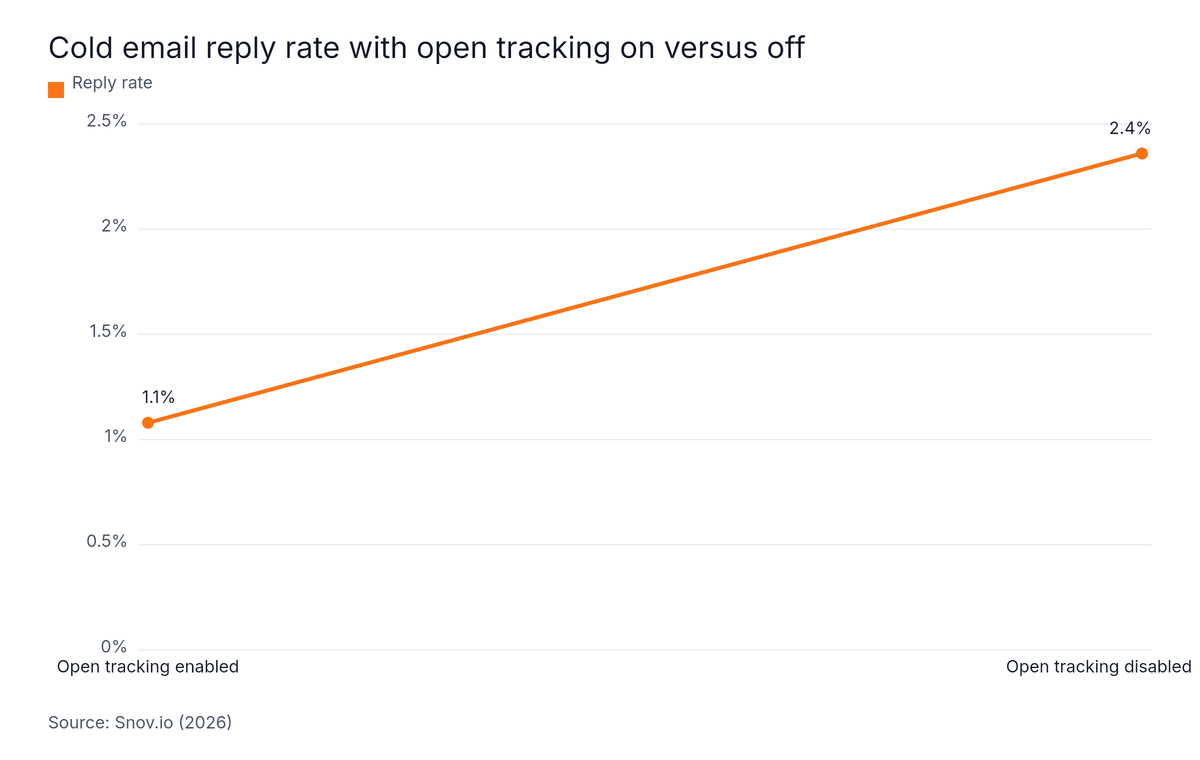
Deliverability is the quiet reason many agency campaigns fail: emails land in spam or get rejected, so the pitch is never read. Snov.io's analysis of more than 10 million emails found reply rates rose from 1.08% to 2.36% when open tracking was turned off (Snov.io, 2026), though that data is correlational, not a controlled test.
A metal mailbox beside a closed iron gate at the end of a quiet lane
Open tracking is a hidden image added to an email to record when it is opened, and it can hurt inbox placement. The Snov.io result shows how a small setting can more than double replies, from 1.08% with tracking on to 2.36% with it off (Snov.io, 2026).
Line chart: Cold email reply rate with open tracking on versus off. Highest: Open tracking disabled at 2.4%.
Spam complaint rate is the share of inbox-delivered emails that recipients mark as spam, and it feeds domain reputation, which is the trust score inbox providers assign to a sending domain. Red Sift's guide reports that Google moved from temporary deferrals to permanent 550 rejections for non-compliant bulk email in November 2025, and that Microsoft began enforcing similar rules on May 5, 2025 (Red Sift, 2025).
The same guide says Gmail's guidance is to keep spam rate below 0.10% and avoid ever reaching 0.30% (Red Sift, 2025). It is a vendor guide, so check Google's own documentation before setting limits.
Does Gmail penalize AI-written cold emails?
Google has not published a blanket penalty for AI-written cold emails in any source reviewed for this guide; the rules reported focus on spam complaint rates and bulk sender compliance. Red Sift's guide says Gmail wants spam rate below 0.10% (Red Sift, 2025), so complaints, not authorship, are what the reported rules measure. Verify in Google's documentation.
How many cold emails can I safely send per domain per day?
No verified source in this guide gives a safe number of cold emails per domain per day, so treat any fixed figure as unconfirmed. The measurable limit is complaints: Red Sift's guide reports Gmail wants spam rate below 0.10% and never 0.30% (Red Sift, 2025). Raise daily volume only while complaints stay under that line, and spread sends across domains.
A simple monitoring routine helps:
Check Google Postmaster Tools weekly for spam rate.
Spread volume across several sending domains.
Remove open tracking from first-touch emails.
Pause any campaign that trends toward the 0.10% line reported by Red Sift (Red Sift, 2025).
Do AI SDRs actually work for booking meetings?
AI SDRs, software agents that automate work once done by a Sales Development Representative (SDR), are widely adopted but rarely rated as effective. Slate CX's 2026 survey found 79% of B2B organizations use or plan to use them, yet only 5% of marketers rate their AI SDRs highly effective (Slate CX, 2026).
A small white toy robot holding an unopened envelope beside a pile of unread letters
What does the ROI evidence say?
The ROI picture is murky. In Belkins' 2026 survey of 120 B2B sales professionals, 77% of teams using AI for lead generation could not say whether it had delivered a positive ROI (Belkins, 2026). In Belkins' AI SDR vs. human SDR analysis, 35.4% of respondents said the vendor claim that AI will eliminate the need for the SDR team has not matched what they have seen in practice (Belkins, 2026).
The Belkins research team describes "a market in the early innings, using AI as a capable assistant rather than an autonomous operator" (Belkins, 2026). That fits what buyers say too. 41% of B2B buyers now start their research on AI platforms rather than Google (Slate CX, 2026).
Use AI to draft and research. Keep a human in charge of who gets contacted and what is promised.
What works instead of spray-and-pray outreach?
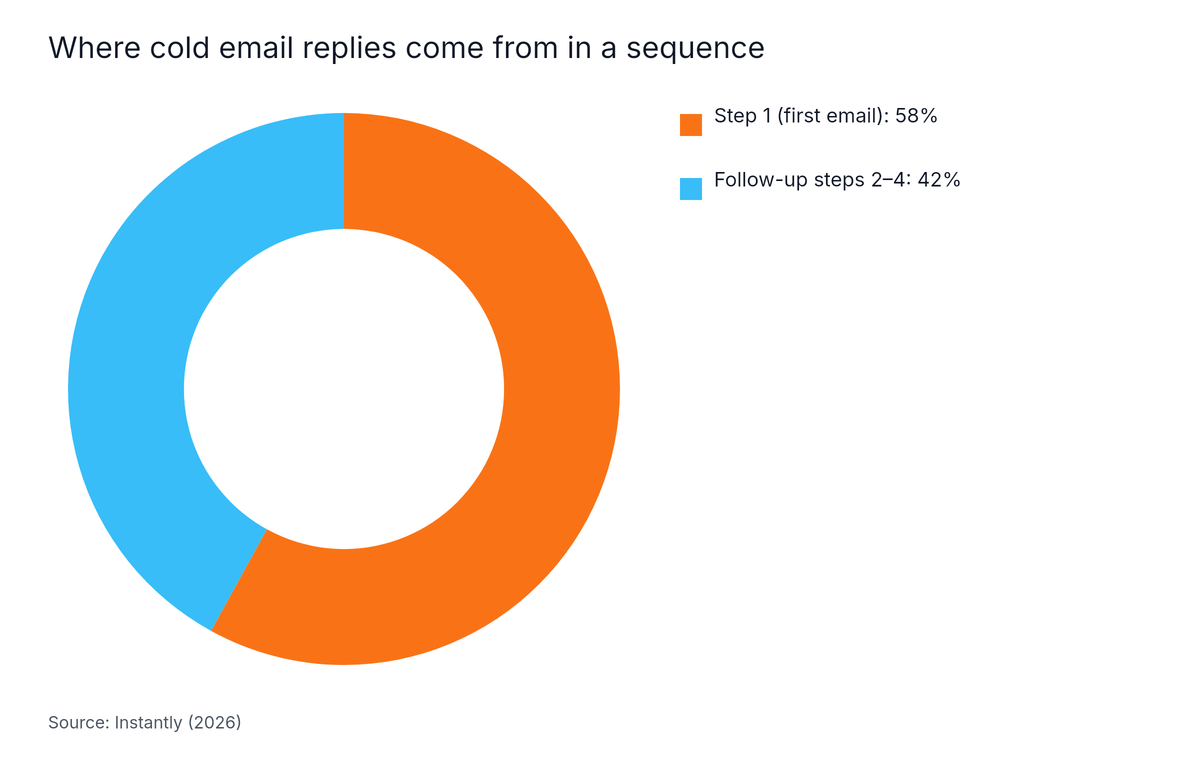
What works instead is fewer, sharper sends to a narrow Ideal Customer Profile (ICP), backed by one proof point and a way for buyers to find you before the pitch. Instantly's data shows step one of a sequence produces 58% of replies (Instantly, 2026), so the first email carries most of the weight.
A hand arranging six numbered paper cards in a row on a wooden table
An Ideal Customer Profile (ICP) is a description of the type of company that gets the most value from your service and is the best fit to target.
A six-step workflow for an AI agency
Narrow the ICP. Pick one niche where you can name a specific, costly problem.
Build a signal list. Target accounts with a trigger, such as a hiring post, a tool change or a funding event.
Write a short first email with one proof point. One problem, one result, one question. A short personalized video can carry the proof point, as in these video prospecting examples.
Run a two to four step sequence. Follow-ups matter: the later steps together add 42% of replies (Instantly, 2026).
Monitor domains and complaints. Check spam rate and inbox placement every week.
Review metrics weekly. Track delivered rate, human reply rate and meetings booked.
Step one produces 58% of replies and follow-up steps together add 42% (Instantly, 2026), so do not abandon follow-ups, and do not rely on them to rescue a weak first email.
Donut chart: Where cold email replies come from in a sequence. Highest: Step 1 (first email) at 58%.
Match the symptom to the likely cause before changing anything. The first row uses a practical rule of thumb (under 1%), not a sourced threshold; compare it with the 3.43% Instantly average (Instantly, 2026).
Symptom
Likely cause
First fix
Replies far below the average (rule of thumb: under 1%)
List quality or deliverability trouble
Verify the list, check spam rate, drop open tracking
Replies but no meetings
Weak or unclear offer
Rewrite the offer around one specific outcome
Meetings but no deals
Wrong ICP or unproven claims
Add a case study or ROI audit offer
Good results, then a sudden drop
Domain reputation damage
Pause sends, review complaints, rotate volume
Cold email is also not the only door. Published case studies, referral partners and LinkedIn presence help buyers verify you before or after your email lands, and 41% of B2B buyers now start research on AI platforms rather than Google (Slate CX, 2026).
Our data: SendPotion's customer data shows GrowPronto booked 45 meetings and closed 7 accounts with Potion's personalized videos.
Who should not rely on this cold outreach advice?
AI automation agency cold outreach advice built on vendor benchmarks has real limits: Belkins' 2026 survey covered only 120 B2B sales professionals, and 57.5% worked at companies with 10 or fewer employees (Belkins, 2026). Most other figures also come from vendors that sell cold email or AI tools, so treat them as directional, not audited.
Keep these caveats in mind:
Slate CX's 2026 survey had 103 sellers and 102 buyers (Slate CX, 2026).
Snov.io's open-tracking finding is correlational, not a controlled experiment (Snov.io, 2026).
Spam thresholds here come from a vendor guide, not Google's own page (Red Sift, 2025).
If your agency already wins most clients through referrals, tuning cold outreach is optional, not urgent.
Frequently Asked Questions
What is a good cold email reply rate in 2026?
A good cold email reply rate in 2026 is above the 3.43% platform average, and 10.7% or more places a campaign in the top 10%, according to Instantly's 2026 data (Instantly, 2026). Saleshandy's analysis of 30.31 million cold emails found a 4.5% average (Saleshandy, 2026). Vendors define replies differently, so compare your results with a benchmark that uses the same definition.
Why do cold email benchmarks differ so much?
Cold email benchmarks differ because vendors define a reply differently and divide by different totals. Instantly counts replies as it defines them (Instantly, 2026), and other vendors strip auto-replies, which lowers the figure. Saleshandy's earlier study is cited at 3.7% against 4.5% for its newer dataset (Saleshandy, 2026). Pick one definition and measure human replies against delivered email.
Does Gmail penalize AI-written cold emails?
No source reviewed for this guide describes a blanket Gmail penalty for AI-written cold emails. The rules reported focus on spam complaint rates and bulk sender compliance, with Gmail guidance of keeping spam rate below 0.10% (Red Sift, 2025). Confirm the current position in Google's own documentation.
How many cold emails can I safely send per domain per day?
No verified source in this guide gives a safe number of cold emails per domain per day, so treat any fixed figure as unconfirmed. The measurable limit is spam rate: Red Sift's guide reports Gmail guidance of below 0.10% and never reaching 0.30% (Red Sift, 2025). Increase volume only while complaints stay under that line.
Do AI SDRs actually work for booking meetings?
AI SDRs work inconsistently: 79% of B2B organizations use or plan to use them, but only 5% of marketers rate them highly effective, according to Slate CX's 2026 survey (Slate CX, 2026). Belkins' 2026 survey also found 77% of teams using AI for lead generation cannot say whether it has delivered a positive ROI (Belkins, 2026).
How many follow-ups should a cold email sequence have?
A cold email sequence should have two to four steps, because follow-ups still matter. Instantly's 2026 benchmark report found step one produces 58% of replies and the follow-up steps together add 42% (Instantly, 2026). Keep the first email strong, then use short follow-ups instead of long sequences.
Conclusion
AI automation agency cold outreach fails when volume replaces relevance. Buyers are responding less, benchmarks are widely misread, and deliverability problems hide behind low numbers.
Measure human replies on delivered email, and keep one definition.
Protect your domains: drop open tracking and watch spam rate.
Treat AI as an assistant, since only 5% of marketers rate AI SDRs highly effective (Slate CX, 2026).
Put your best work in email one, which drives 58% of replies (Instantly, 2026).
Build proof and findability so buyers can verify you.
Your next step: record one strong personalized first touch and test it against your current text-only opener. Here is how teams handle personalized videos at scale without recording each one by hand. Then Start Free Trial to generate AI videos in your own face, voice, and gestures at scale.
Written by
Carlos Agüero
Carlos Agüero builds tools that help B2B sales teams sell smarter. As part of TargetGrid.ai, Skale.email, and Potion, he's focused on multi-channel outreach automation, inbox deliverability, and AI-powered video. Berkeley Haas COBE. Based in Santiago, Chile. Passionate about helping sales teams close more, faster, with less manual work.

 Carlos AgüeroNov 2, 2026