AI Voice Cloning Legal Consent for Sales Videos: The Checklist
By Carlos Agüero, who builds AI video and outreach automation tools for B2B sales teams (Berkeley Haas COBE). He is not a lawyer. This guide is general information, not legal advice, so have qualified counsel review it before you act.
AI voice cloning legal consent is a rep's informed, written and revocable permission for a vendor to build a synthetic copy of their voice or face, with documented limits on how it is used. Legal teams are right to ask about it. The FBI's Internet Crime Complaint Center logged 22,364 complaints with an AI-related descriptor in 2025 (SecureWorld, 2026). Sales leaders still want to send personalized videos at scale without recording each one. This guide gives compliance leads a consent checklist, a law-review order, disclosure rules and a policy outline.
Key Takeaways
A sales rep cloning their own voice is generally the lowest identity-rights risk, but model ownership, vendor retention and voluntary consent are the real issues.
Written consent for a rep's AI clone should name the technology, scope, channels, duration, revocation and offboarding deletion.
Review state digital-replica laws, data protection and biometric rules, and EU AI Act Article 50 in a deliberate order, with counsel confirming each.
EU AI Act Article 50 deepfake labelling does not depend on intent to deceive, and violations can reach €15 million or 3% of worldwide annual turnover.
An internal AI voice cloning policy needs scope, roles, a DPIA trigger, retention, a vendor DPA, disclosure language and an audit log.
Is it legal for a sales rep to clone their own voice for outreach videos?
A sales rep cloning their own voice for outreach videos is generally treated as the lowest identity-rights risk, because the rep is the person being imitated, but counsel should confirm this for your jurisdictions. The real risks are model ownership, vendor retention, voluntary consent and disclosure. As of October 2026, the NO FAKES Act of 2026 has passed neither chamber (LegesGPT, 2026).
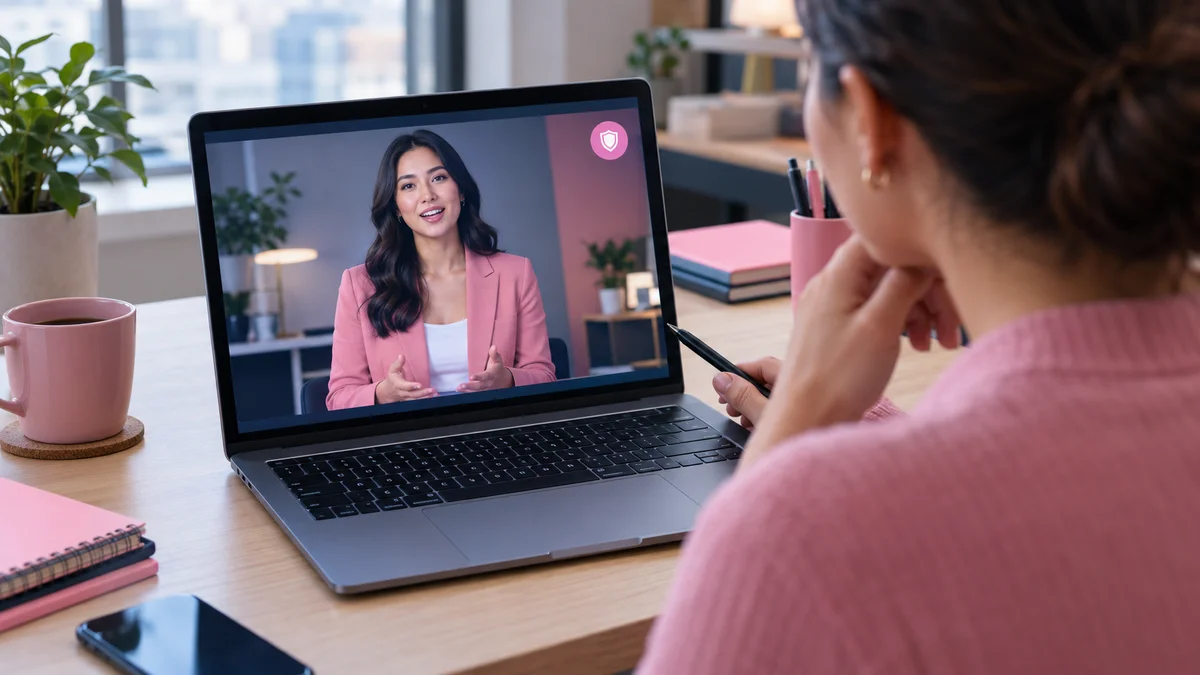
Sales rep recording a short video at a desk with a ring light while a compliance folder lies beside the laptop
Voice cloning is the use of software to create a synthetic copy of a person's voice from recorded samples. A digital replica is a computer-generated imitation of a real person's voice or likeness. Both terms matter because state laws now regulate replicas directly, and they cover faces as well as voices.
Where the legal risk actually sits
Own-voice cloning still carries practical caveats:
Model ownership: if the employer pays for the clone, the contract must say who owns it and who may use it.
Vendor terms: some tools retain or train on a customer's voice data.
Biometric processing: the vendor handles voice and face data, which can trigger data protection duties.
Disclosure: a clone that says "I recorded this for you" can mislead.
State law still governs the field. A 2026 tracker summary reports that Illinois' Right of Publicity Act amendments on digital replicas took effect on 1 January 2025. It also reports that Washington's SSB 5886 took effect on 11 June 2026 (LegesGPT, 2026). Check the statutes themselves with counsel.
Why consent controls matter
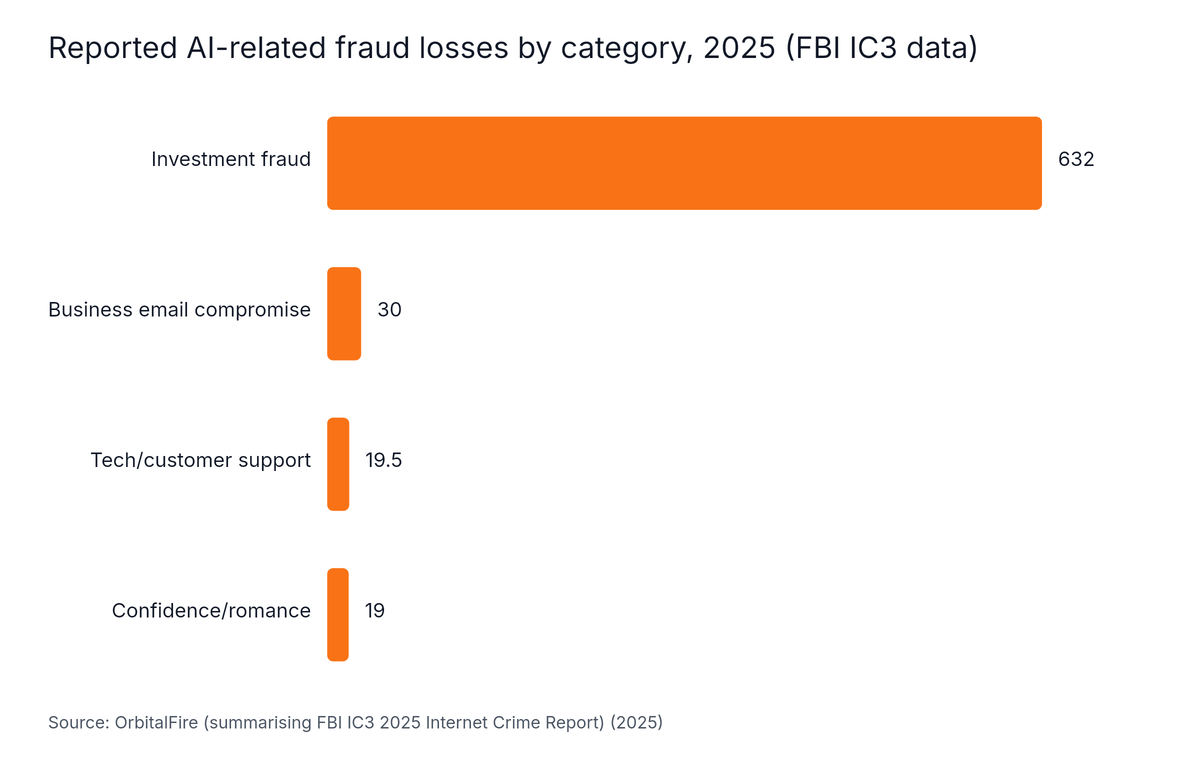
Fraud data explains the caution. The FBI's 2025 report logged $893 million in adjusted losses on AI-related complaints (SecureWorld, 2026). The descriptor records that a complaint mentioned AI, not confirmed AI involvement. Investment fraud was the largest category, at $632 million (OrbitalFire, 2026).
Horizontal Bar chart: Reported AI-related fraud losses by category, 2025 (FBI IC3 data). Highest: Investment fraud at 632.
None of this makes a rep's own clone illegal. It shows why a clone needs rules on who can use it, where it runs and when it is deleted. Email and hosted video also behave differently from calls, which matters for video email marketing in B2B sales.
What written consent should we collect before a rep's voice is cloned for sales videos?
Before a rep's voice or face is cloned, collect signed, dated, plain-language written consent that names the technology and vendor, the content and channels covered, the duration, how to revoke, and what happens at offboarding. The consent must be voluntary: include a genuine opt-out and a no-retaliation promise, because an employer's request carries a power imbalance.
Hand signing a consent form on a table next to a laptop showing a paused video
The consent checklist
Use these ten items as the clause list for the written consent:
Name the technology and the vendor. Say plainly that an AI system will copy the rep's voice, face and gestures.
Define scope. List what is cloned (voice, face, gestures) and the content types allowed, such as one-to-one prospecting videos.
Limit channels. Name email, LinkedIn and hosted video pages. Exclude calls, voice drops and texts unless counsel clears them.
Set duration. State a term and a review date.
Allow revocation. Explain how the rep withdraws consent and how fast the team will stop using the clone.
Delete at offboarding. Remove the model, source recordings and generated assets when the rep leaves, with a confirmation.
Ban sublicensing and reuse. No one else may use the clone, and the vendor may not train other models on it.
Protect voluntariness. Provide a real opt-out and a written no-retaliation clause.
Set content boundaries. The rep approves scripts and templates, and the clone never says what the rep would not say.
Verify identity. Capture live consent so only the rep can create their own clone.
The consent record
Store each consent as a record, not just a PDF. A usable schema looks like this:
Field
Example value
Why it matters
Consent version
v1.2, signed 2026-10-22
Shows which wording the rep accepted
Content scope
Prospecting videos, email and LinkedIn
Proves use stayed inside the agreed scope
Revocation status
Active / revoked on date
Triggers deletion and stops generation
Vendor and storage location
Named vendor, hosting region
Supports vendor DPA and audit checks
Identity check
Live webcam consent captured
Shows the rep cloned only themselves
Deletion confirmation
Date model and sources deleted
Closes the loop at offboarding
Why checkbox consent is not enough
Vendors often make cloning easy without proof of consent. Consumer Reports said a majority of the products it assessed "did not have meaningful safeguards to stop fraud or misuse of their product" (Consumer Reports, 2025). The same March 2025 assessment found that 4 of 6 voice-cloning tools relied on checkbox self-attestation. Your internal consent therefore has to do the work the tool may skip.
Which consent laws should we review first?
Review consent laws in this order. First the rep's and prospect's locations, then state digital-replica and publicity laws, telephone and text consent rules, biometric and data protection rules such as GDPR and Illinois BIPA, EU AI Act Article 50, and FTC deception principles. Confirm each with counsel.
A desk with a world map, numbered sticky notes and a ranked list used to decide which laws apply first
The Telephone Consumer Protection Act (TCPA) is a US federal law that governs consent for marketing calls and texts. Biometric data is personal data about a person's physical traits, such as a face or voice, that can identify them. Whether a clone counts as biometric depends on how it is processed, so ask your Data Protection Officer (DPO) for a written view.
Priority
Regime
When it applies
Status as of October 2026
1
Rep and prospect location
Decides which laws below apply
Map before launch
2
State digital-replica and publicity laws (for example Illinois, Washington)
Cloned voice or likeness used commercially
Illinois amendments reported in force since 1 January 2025; Washington SSB 5886 since 11 June 2026 (tracker summary, verify against statutes)
3
Telephone and text consent rules (TCPA)
Only if a clone is used on calls, voice drops or texts
Confirm scope with counsel
4
GDPR and Illinois BIPA
Vendor processes voice or face data
In force; get a DPO analysis
5
EU AI Act Article 50
Synthetic video that would falsely appear authentic
Disclosure duties applied since 2 August 2026
6
NO FAKES Act of 2026 (S.4591)
Federal digital-replica rights
Pending; passed neither chamber
7
FTC deception principles
Any outreach that misleads buyers
Unverified here: no source reviewed, confirm guidance with counsel
EU AI Act Article 50 carries the steepest published penalty in this order. Violations can draw administrative fines of up to €15 million or 3% of worldwide annual turnover, whichever is higher (Baker Botts, 2026).
Do telephone consent rules apply to emailed or hosted video?
Telephone and text consent rules such as the TCPA are written around calls, voice drops and texts, so an emailed or hosted video may sit outside them. That is a question for counsel, not an assumption. The risk returns if your team sends the same clone by text or turns it into a voice drop.
Treat this table as a triage order, not a legal opinion. Biometric detail and disclosure each deserve their own review.
Do we need to tell prospects a video uses an AI-cloned voice or face?
EU AI Act Article 50 requires labelling of deepfakes, meaning synthetic audio or video that would falsely appear authentic, and its disclosure duties have applied since 2 August 2026 (regulation-ai.eu, 2026). Outside the EU, treat disclosure as best practice and confirm FTC and state guidance with counsel.
A video thumbnail on a laptop screen with a small AI-generated badge in the corner
A deployer under the EU AI Act is the organization that uses an AI system under its own authority. The Commission's draft guidelines treat a marketing team using a third-party video tool as a deployer that owes the disclosure itself. Intent does not change that. As Greenberg Traurig put it, "Accordingly, the absence of fraudulent intent would not defeat the labeling requirement." (Greenberg Traurig, 2026)
What the EU exposure looks like
Fines: "Violations can result in administrative fines of up to 15 million euros or 3% of worldwide annual turnover, whichever is higher." (Baker Botts, 2026)
Marking deadline: machine-readable marking for generative systems already on the EU market has until 2 December 2026 (regulation-ai.eu, 2026).
Guidance: the Commission adopted non-binding guidelines on 20 July 2026, and the EU AI Office published a voluntary Code of Practice on 31 July 2026.
A practical disclosure habit
Whatever the law requires, a short label beats a dispute. Put a line such as "This video was generated with AI from my voice and face" on the hosted video page and in the email footer. Keep the wording consistent across channels, and log it in the consent record. A clone that opens with "I recorded this for you" is the highest-risk wording.
What should an internal AI voice cloning policy cover?
An internal AI voice cloning policy should cover scope, roles, lawful basis and a Data Protection Impact Assessment (DPIA) trigger. It also needs retention and deletion, a vendor Data Processing Agreement (DPA) with a no-training clause, disclosure language, misuse response and an audit log, each with a named owner.
A printed policy document with a highlighter beside a binder of audit logs
A Data Processing Agreement (DPA) is a contract that sets how a vendor may handle personal data on a customer's behalf. A DPIA is a structured risk assessment run before high-risk processing begins. Guardrails against reuse matter because business email compromise losses reached $3.04 billion in the FBI's 2025 data (Red Sift, 2026). That total is not specific to voice cloning, but commentators link it to voice-cloned executive impersonation.
Policy section
Minimum content
Suggested owner
Scope
Who may be cloned (own face and voice only), which channels, which content
Compliance lead
Roles
Rep, manager, DPO, vendor owner
DPO
Lawful basis
Documented basis and consent record schema
DPO
DPIA trigger
Run before any new vendor or new use of face or voice data
Ask each vendor to show live-consent capture, voice-lock features and no-training commitments. When you compare the best video prospecting tools for SDR teams, add these to the scorecard. Request security audits and data agreements in writing from every vendor on your shortlist.
Our data: SendPotion's customer case study shows GrowPronto booked 45 meetings and closed 7 accounts with Potion's personalized videos. Potion holds SOC 2 Type I, an independent third-party audit of product and infrastructure security, and publishes a DPA and Privacy Policy that it self-claims as aligned with GDPR and CCPA.
Ethical guidelines for reps
Clone only yourself. Never upload someone else's recordings.
Approve what the clone says. Review scripts and templates before a send.
Stay truthful. Don't claim you recorded a video personally when the AI generated it.
Protect the model. Keep the clone behind the rep's own login, and never share it with colleagues.
Honor revocation. Stop using the clone as soon as consent is withdrawn.
Limits of this checklist
This checklist is an operational starting point. It does not suit teams that clone anyone other than the consenting rep, use clones on calls or texts, or sell into regulated markets without counsel review. The FBI figures come from secondary summaries, the NO FAKES Act is pending, and employee consent needs employment counsel in each country.
Frequently Asked Questions
Legal flagged voice cloning as a risk. Which consent laws should we review first?
Start with state digital-replica and publicity laws where your reps and prospects are located. Then review telephone and text consent rules if clones are ever used on calls or texts, biometric and data protection rules such as GDPR and Illinois BIPA, EU AI Act Article 50, and FTC deception principles. Confirm each with counsel.
What ethical guidelines should our team follow when reps use AI clones of themselves?
Ethical guidelines for reps cloning themselves for sales videos: clone only yourself, approve every script, say only what you would say in person, and never let colleagues reuse the clone. Disclose synthetic video where a prospect could be misled, honor revocation quickly, and delete the model when the rep leaves.
Our DPO wants an internal AI voice cloning policy. What should it cover?
An AI voice cloning policy should cover scope, roles, lawful basis, a Data Protection Impact Assessment trigger, retention and deletion, a vendor Data Processing Agreement with a no-training clause, disclosure language, misuse response and an audit log. Each section needs a named owner and a review date.
Can an employer require reps to consent to a voice clone as a condition of employment?
An employer can ask, but consent given as a condition of employment is fragile because of the power imbalance between employer and employee. A safer approach offers a genuine opt-out, a no-retaliation promise, narrow scope, easy revocation, deletion at offboarding and a ban on sublicensing. Confirm the approach with employment counsel.
Conclusion
Cloning your own voice and face for sales videos is workable when consent is written, voluntary and documented. Keep these points in view:
Collect signed consent that names the technology, scope, channels, duration, revocation and offboarding deletion.
Offer a real opt-out with no retaliation.
Review laws in order: location, state replica laws, data protection and biometric rules, Article 50, FTC, with counsel confirming each.
Label synthetic video where a prospect could be misled, and remember that intent does not excuse a missing label in the EU.
Give your DPO a policy with owners, a vendor DPA and an audit log.
Next step: take the checklist and policy table to your DPO and counsel this week. When the paperwork is ready, Start Free Trial to generate AI videos in your own face, voice, and gestures at scale, or see how teams add video to every sequence in this video prospecting playbook.
Written by
Carlos Agüero
Carlos Agüero builds tools that help B2B sales teams sell smarter. As part of TargetGrid.ai, Skale.email, and Potion, he's focused on multi-channel outreach automation, inbox deliverability, and AI-powered video. Berkeley Haas COBE. Based in Santiago, Chile. Passionate about helping sales teams close more, faster, with less manual work.

 Carlos AgüeroOct 31, 2026