What Is a Video Sales Letter (VSL)? Structure, Script and Funnel
video sales lettervsl funnelvsl script
What Is a Video Sales Letter (VSL)? Structure, Script and Funnel
Learn what a video sales letter is, how to structure a VSL script, what a VSL funnel looks like from ad to booked call, and where it fits in a high-ticket funnel.
What Is a Video Sales Letter (VSL)? Structure, Script and Funnel
By Carlos Agüero, Co-founder at Potion (sendpotion.com), where he has built and tested video sales funnel systems for B2B sales teams across SaaS, coaching and agency verticals.
A video sales letter (VSL) is a scripted, pre-recorded sales presentation in video format that moves a viewer from awareness to a desired action, such as a purchase or a booked call, without a live salesperson present. For high-ticket coaches, consultants and B2B sales teams, the VSL has become one of the most reliable mechanisms for converting cold traffic into qualified conversations at scale.
The problem it solves is straightforward. Written sales pages get skimmed. Live webinars require scheduling. A well-built VSL plays on demand, holds attention through a structured persuasion arc, and hands the viewer a clear next step when it ends. Whether you are selling a coaching program, a SaaS subscription or a consulting retainer, the same underlying structure applies.
This guide covers what a VSL is, how a VSL funnel sequences from ad to booked call, where the video sales letter sits in a high-ticket sales funnel, how to structure a VSL script, and how long each section should be.
Key Takeaways
A video sales letter (VSL) is a scripted, pre-recorded sales video that replaces or supplements a written sales page, guiding a viewer from awareness to action without a live salesperson.
A VSL funnel routes cold traffic through an ad, a landing page, the video itself, and a call-to-action (CTA) step such as a calendar booking or checkout page.
In a high-ticket sales funnel, the VSL sits between the traffic source and the sales call, pre-qualifying prospects and handling objections before the conversation starts.
A standard VSL script follows five sections: hook, problem, solution, proof, and call to action.
High-ticket VSL scripts run 2,500 to 6,000 words (roughly 15 to 45 minutes of video); call-booking VSLs are shorter at 750 to 2,000 words.
What Is a Video Sales Letter (VSL)?
A video sales letter (VSL) is a scripted, pre-recorded sales presentation in video format that moves a viewer from awareness to a desired action, such as a purchase or a booked call, without a live salesperson present. Unlike a product demo or brand video, a VSL follows a deliberate persuasion structure: it identifies a problem, presents a solution, builds credibility with proof, and closes with a clear call to action (CTA).
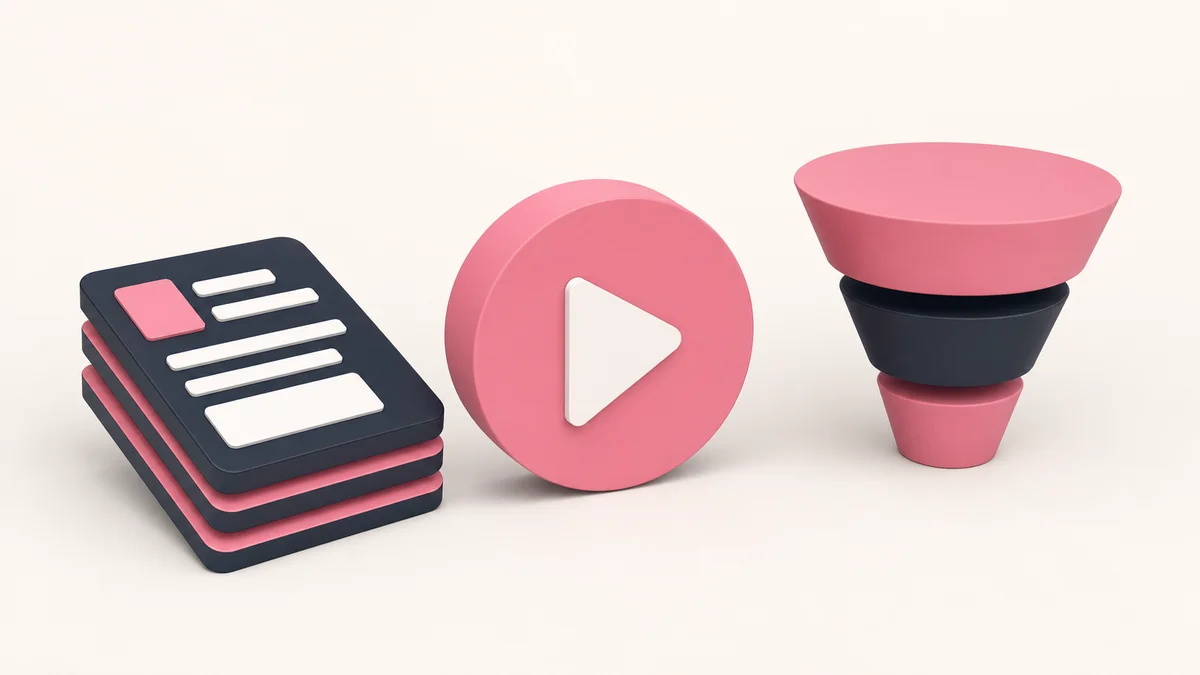
Isometric illustration of a video play button, script pages and a three-stage sales funnel
The term "video sales letter" comes directly from the long-form written sales letters that direct-response copywriters used in print and email marketing. The format adapted for video because people are more likely to watch than read, and because tone of voice, pacing and visual cues carry emotional weight that text alone cannot.
A VSL is not the same as a product explainer, a testimonial reel or a brand video. Those formats inform. A VSL sells. Every sentence in a VSL script serves one of three jobs: deepen the viewer's felt problem, build their belief in the solution, or lower their resistance to taking the next step.
VSL vs. Webinar: A Quick Distinction
Format
Length
Interactivity
Best use case
Funnel position
Video sales letter (VSL)
5 to 45 min
None (pre-recorded)
Convert cold traffic to calls or sales
Top to mid-funnel
Webinar
60 to 90 min
Polls, live Q&A
Mid-funnel nurture; warmer audiences
Mid to bottom-funnel
A webinar is a live or simulated-live presentation that includes interactive elements such as polls and Q&A. A VSL is pre-recorded, self-contained and designed to be watched on demand. VSLs are faster to produce, easier to split-test, and better suited to cold traffic that needs a focused argument before acting.
What Does a VSL Funnel Look Like from Ad to Booked Call?
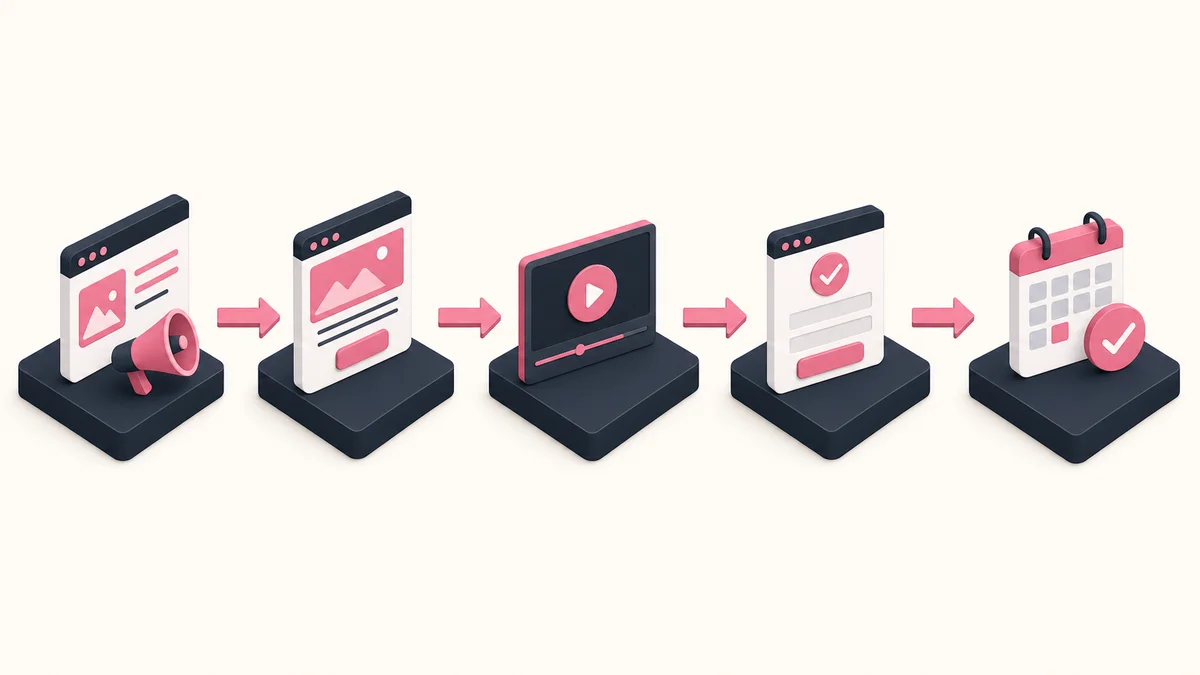
A VSL funnel is a sequenced conversion path that takes a cold prospect from a paid or organic ad through a video sales letter landing page and into a booked sales call or purchase. The standard stages are: ad, opt-in or direct landing page, the VSL itself, a call-to-action page, and a confirmation step that typically includes a calendar embed for call booking.
Isometric funnel diagram showing five stages from ad to booked call
Potion's data: Teams using AI-generated video in their outbound sequences report approximately 15 hours per sales rep per week saved on manual recording, according to Potion's customer data (2024). That reclaimed time is typically redirected into more prospecting and VSL follow-up work.
Potion's data: Those same teams report outreach volume scaled 5x to 10x compared to manual recording workflows, according to Potion's customer data (2024).
Here is how each stage functions:
Funnel Stage
Purpose
Typical Format
Ad (paid or organic)
Interrupt the scroll; qualify curiosity
Short video ad, image ad or email
Landing / opt-in page
Capture attention; deliver the VSL
Single-focus page, no navigation
Video sales letter
Educate, persuade and handle objections
15 to 45 min video, auto-play optional
CTA page
Convert the warmed prospect
Button to calendar, checkout or application
Confirmation / thank-you
Confirm next step; reduce drop-off anxiety
Calendar confirmation, next-step instructions
What the Ad Has to Do
The ad's job is narrow: generate one click from the right person. It does not need to sell the offer. It needs to create enough curiosity or surface enough pain that the viewer clicks through to the VSL page. A well-matched ad-to-VSL message improves conversion because the viewer arrives already engaged.
The Landing Page's One Job
The VSL landing page exists to get the video watched. Best practice keeps the page free of navigation menus, sidebars and outbound links. A short headline above the video, the video itself, and a CTA below it are often all that is needed. Some VSL funnels require an email opt-in before the video plays; others send traffic directly to an open VSL page. The opt-in approach builds a retargeting list; the open approach reduces friction and increases immediate video plays.
After the Video: The CTA Step
Once the VSL ends, the viewer should face one clear option. For high-ticket offers where a sales call is required, that option is a calendar booking button. For lower-ticket offers, it may be a checkout page. Adding multiple options at this stage dilutes the conversion and undermines the persuasion work the VSL just completed.
Where Does the Video Sales Letter Sit in a High-Ticket Sales Funnel?
In a high-ticket sales funnel, the video sales letter sits between the initial traffic source and the sales conversation. Its job is to pre-qualify, educate and warm the prospect so that, when a discovery call happens, the prospect already understands the offer and has self-selected as a serious buyer. Potion's customer data shows reply rates 3x to 5x higher than text-only cold email when personalized video is added to the sequence (Potion case study hub, 2024).
Isometric shelf with five labeled blocks representing VSL script sections in sequence
This placement matters for two practical reasons.
First, it protects the sales team's time. A salesperson speaking to prospects who have already watched a 30-minute VSL and self-selected by booking a call operates at a very different close rate compared to one fielding cold, unqualified inquiries. The VSL acts as a filter.
Second, it compresses the trust-building timeline. In a traditional outbound sequence, a Sales Development Representative (SDR) might send five to eight touchpoints before a prospect agrees to a call. A VSL can deliver the equivalent of several nurture messages in one sitting, with the added weight of voice, face and story.
Potion's data: GrowPronto booked 45 meetings and closed 7 accounts after adding personalized video to their outbound sequence, according to Potion's customer data (2024). (GrowPronto case study, 2024)
How the VSL Fits Alongside Other Funnel Assets
Funnel Asset
Position
Primary Job
Cold email or ad
Top of funnel
Drive traffic to the VSL page
Video sales letter
Mid-funnel
Educate, qualify and warm the prospect
Application or booking form
Mid to bottom
Confirm intent; gather qualification data
Discovery or strategy call
Bottom of funnel
Close the sale with a live salesperson
Follow-up sequence
Post-VSL / post-call
Re-engage no-shows and undecided prospects
For teams that also use personalized outbound video, the VSL and the prospecting video play distinct roles. A personalized prospecting video is sent one-to-one inside a cold email to book the first conversation. The VSL is hosted on a landing page and watched before or instead of a sales call.
What Structure Should a VSL Script Follow?
A VSL script is the written document that structures the full spoken content of a video sales letter, following a five-part persuasion framework: a pattern-interrupting hook, a problem statement that amplifies pain, a solution introduction that positions the offer, a proof section that uses case studies or results to build credibility, and a close with a direct call to action.
Each section has a specific job, and the order is not arbitrary. It maps to how a skeptical prospect's trust is built, layer by layer.
1. The Hook
A hook is the opening 30 to 90 seconds of the VSL, and its only goal is to stop the viewer from clicking away. Effective hooks do one of three things: make a bold, specific claim, name the exact person the video is for, or ask a question that lands directly on the viewer's pain.
A weak hook is a company introduction. Nobody stays for "Hi, I'm [Name], founder of [Company]" in the first sentence. Name the viewer's situation before you name yourself.
2. The Problem
The problem section deepens the pain the viewer already feels. Good VSL copywriters describe the surface symptom first (the thing the prospect complains about), then the root cause beneath it (why the symptom keeps recurring), and finally the emotional cost (what it is doing to their confidence, revenue or relationships). The viewer should finish this section thinking "this person understands my situation."
3. The Solution
The solution section introduces the offer as the mechanism that addresses the root cause, not just the symptom. This section avoids feature lists. Instead, it explains how the approach works at a conceptual level and why it works where other approaches have failed. The viewer should finish thinking "I have not tried this specific approach before."
4. The Proof
The proof section is where trust is built with evidence. Case studies, client results, specific numbers and before-and-after stories belong here. Specificity matters more than quantity: one detailed case study with named results is more persuasive than five vague testimonials.
Potion's data: SAP closed over USD 500,000 using AI-generated personalized videos as part of their sales motion, according to Potion's customer data (2024). (SAP case study, 2024)
If you are writing for a newer offer without extensive case studies, mechanism proof (showing exactly why the approach works logically) can substitute while social proof is being built.
5. The Close and CTA
The close restacks the value of the offer, addresses the one or two remaining objections the viewer is most likely holding (price, time commitment, skepticism about results), and delivers a single, direct call to action (CTA). "Click the button below to book your free strategy call" is a close. "If you'd like to learn more, feel free to reach out" is not.
How Long Should a Video Sales Letter Script Be, and What Goes in Each Section?
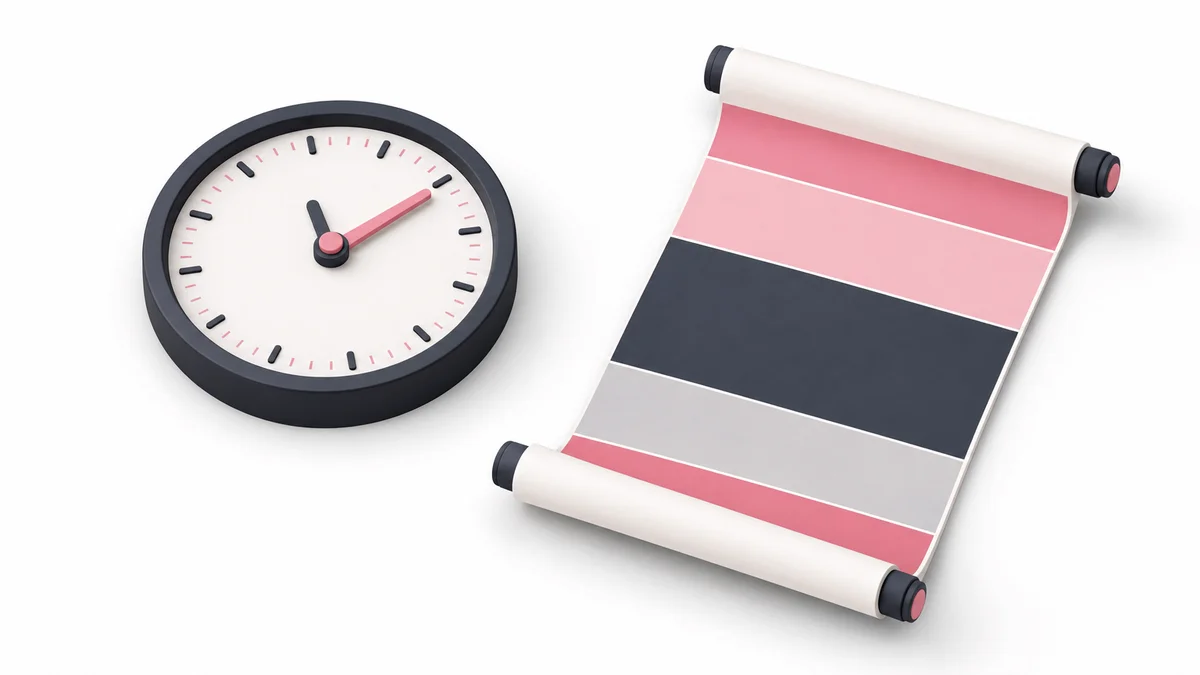
A video sales letter script for a high-ticket offer typically runs 2,500 to 6,000 words, translating to roughly 15 to 45 minutes of spoken video. Shorter scripts of 750 to 2,000 words work when the VSL's only goal is to book a call rather than close a sale directly. The five sections, hook, problem, solution, proof, and CTA, vary in length based on the offer's complexity and the audience's awareness level.
Isometric analog clock beside a segmented scroll showing proportional VSL script sections
At an average speaking pace of 130 to 150 words per minute, a 3,000-word script runs approximately 20 to 23 minutes. Recording at a natural conversational pace and editing out silence gaps (rather than speeding up the recording) produces the most watchable result.
Script Length by VSL Goal
VSL Goal
Recommended Script Length
Approximate Video Length
Book a discovery call (high-ticket)
750 to 2,000 words
5 to 15 minutes
Close a mid-ticket offer directly
2,500 to 4,000 words
15 to 25 minutes
Close a high-ticket offer directly
4,000 to 6,000 words
25 to 45 minutes
Section-by-Section Word Count Guide
The five sections of a VSL script do not share equal weight. The following allocations are the author's recommended framework for a 3,000-word call-booking VSL, based on the persuasion logic of each section:
Hook: 150 to 300 words. Short and punchy. Every extra second before the problem is named risks losing viewer attention.
Problem: 450 to 600 words. Enough space to go three layers deep: symptom, root cause, emotional cost.
Solution: 600 to 750 words. Conceptual explanation of the mechanism, not a feature list.
Proof: 750 to 900 words. The weightiest single section. One to three case studies with specific outcomes.
Close and CTA: 300 to 450 words. Value restack, one or two objection rebuttals, and the single CTA.
For a VSL designed to close a high-ticket offer without a sales call, the proof section typically needs more room. The hook stays short regardless of total script length.
Pacing and Delivery Notes
Faster than 150 words per minute and the viewer cannot process the argument. Slower than 120 words per minute and attention drifts. Edit for silence gaps rather than speeding up the recording to keep the delivery crisp.
How Do You Start Building a VSL?
Start with the script. A VSL script for a high-ticket offer opens with a pattern-interrupting hook of 150 to 300 words, moves through problem, solution and proof, and closes with a single call to action. The funnel architecture, ad, landing page, VSL, booking step, is built around the script, not before it. Getting the persuasion structure right on paper is the single highest-leverage step in the process.
Once the script is drafted, the production sequence looks like this:
Record the video (or use AI-generated video to create personalized versions at scale).
Build a focused landing page: headline, video, CTA, with no navigation.
Connect the CTA button to a calendar tool or checkout page.
Write and launch the ad or cold outreach sequence that drives traffic to the landing page.
Track completion rate, click-through rate on the CTA, and booked-call rate to identify which section needs revision first.
For teams running personalized outbound video alongside a hosted VSL, it helps to understand why the two formats serve different purposes. Personalized prospecting videos are sent one-to-one inside cold email sequences to start conversations. The VSL is hosted on a landing page and viewed before or instead of a live sales call.
For high-ticket marketers evaluating video platforms, compliance and data security matter. Potion holds SOC 2 Type I certification, is rated 4.5+ stars on G2 in Video Prospecting and AI Video Creation (as of 2024), and generates videos in the rep's own face and voice rather than stock avatars. That distinction matters when the VSL's credibility depends on the prospect believing they are hearing from a real person. Potion's video sales letter software handles the personalized outbound side, letting teams scale without sacrificing authenticity.
Ready to add personalized video to your VSL funnel? Start your free trial at sendpotion.com
Who This Is Not For
A video sales letter is a poor fit for offers priced below $100, fully warm inbound audiences, and B2B verticals such as legal or government where workplace video consumption is low. VSLs require meaningful production time, a clear scripted persuasion case, and an offer with enough margin to support the surrounding funnel.
Specific situations where a VSL is likely the wrong format:
Low-ticket offers under $100. The cost of producing and split-testing a VSL funnel rarely justifies the margin available. A short-form sales page typically converts as well for less investment.
Fully inbound, warm audiences. If the prospect already knows and trusts you from organic content, a VSL may be unnecessarily long. A short explainer or a direct booking link may convert faster.
Products requiring a live product demo. If the prospect needs to see the product interact with their own data before deciding, a VSL cannot replicate that experience. Use the VSL to get them to a demo, not to replace it.
Audiences with low video consumption habits. Some B2B verticals, including legal, finance and government, have environments where video consumption in a work context is low. A detailed written page may outperform a VSL in those settings.
Frequently Asked Questions
What is the difference between a VSL and a webinar?
A video sales letter is a pre-recorded, self-contained sales video that a viewer watches on demand, without registration or a scheduled time slot. A webinar is typically live or simulated-live, runs longer, and involves interactive Q&A. VSLs are faster to produce, easier to split-test, and better suited to cold traffic that needs a short, focused argument before taking action.
How long should a VSL be for a high-ticket offer?
A video sales letter for a high-ticket offer typically runs 15 to 45 minutes when the price point requires substantial trust-building and objection handling. Shorter VSLs of 5 to 15 minutes work when the goal is to book a call rather than close immediately. The right length follows from the complexity of the offer and the awareness level of the audience.
Do you need a VSL to sell a high-ticket offer?
A video sales letter is not mandatory, but it is one of the most efficient ways to qualify and warm prospects before they speak to a salesperson. A well-structured VSL handles the education and objection-handling work that would otherwise fall on a discovery call, which shortens sales cycles and improves close rates for high-ticket offers.
Can you personalize a VSL for individual prospects?
Yes. A standard video sales letter is a single recording played to all visitors, but personalized video tools let you insert prospect-specific elements such as the viewer's name, company name, or a dynamic screen recording of their website into the video. Personalized video emails work differently from page-hosted VSLs: they are sent one-to-one and act as a VSL delivered directly to the inbox.
What platform should you host a VSL on?
A video sales letter is most effective when hosted on a dedicated landing page rather than a social media profile or a standard website page. Dedicated landing pages remove navigation distractions, let you control the viewer's environment, and make it easy to embed a calendar or a CTA button directly below the video for immediate next-step action.
Putting It Together
A video sales letter is the single highest-leverage asset in a high-ticket sales funnel. Potion's customer data shows reply rates 3x to 5x higher than text-only cold email when personalized video is added to an outbound sequence (Potion case study hub, 2024), and teams report approximately 15 hours per sales rep per week reclaimed from manual recording. The five-section script structure and sequenced funnel give you a repeatable framework to convert cold traffic into booked calls.
The five-section script structure (hook, problem, solution, proof, CTA) gives you a repeatable persuasion framework. The funnel sequence (ad, landing page, VSL, CTA step, confirmation) gives you the architecture to route cold traffic into booked calls. The section-by-section word count guide gives you a practical starting point for your first draft.
Start with the script. Once the argument is tight on paper, everything else, the landing page, the ad creative, the follow-up sequence, becomes much easier to build and test.
Ready to add personalized video to your VSL funnel? Start your free trial at sendpotion.com
Written by
Carlos Agüero
Carlos Agüero builds tools that help B2B sales teams sell smarter. As part of TargetGrid.ai, Skale.email, and Potion, he's focused on multi-channel outreach automation, inbox deliverability, and AI-powered video. Berkeley Haas COBE. Based in Santiago, Chile. Passionate about helping sales teams close more, faster, with less manual work.

 Carlos AgüeroOct 18, 2026